AI transformation
AI change management
AI change management is the work of moving people, roles, and rules to a new way of working once AI agents take on part of the job. Cameron LiButti led this change at Bidview Marketing, the agency he founded. He moved the team to an agent-first operating model, where humans own the client relationship and AI agents own the execution.
Questions & answers
AI change management FAQ
What is AI change management?
AI change management is the work of moving people, roles, and rules to a new way of working once AI agents take on part of the job. It covers who reviews agent output, how the method is written down, and how the team is trained.
What did Cameron LiButti change at Bidview?
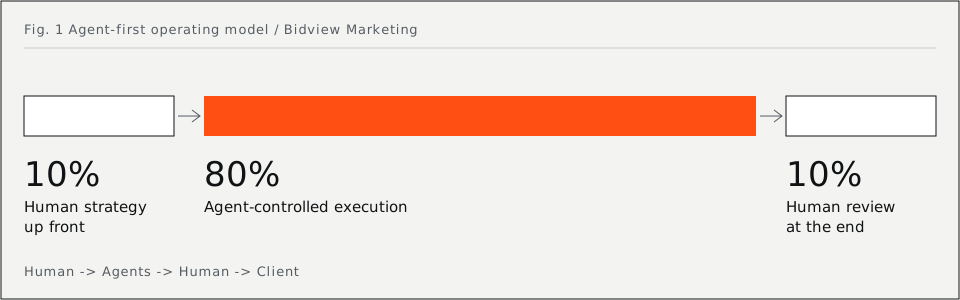
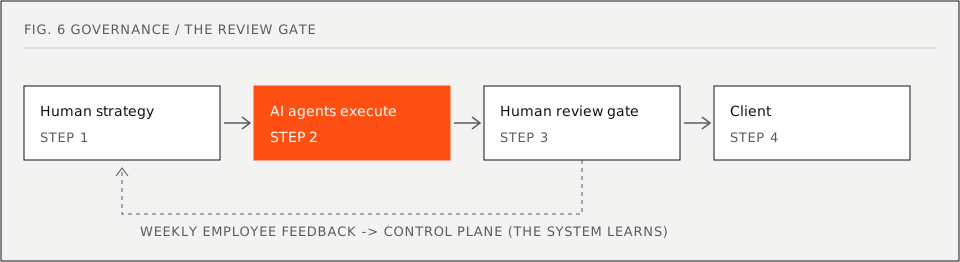
He moved Bidview Marketing to an agent-first operating model. Humans own the client relationship. AI agents own the execution. Work runs on a 10/80/10 split: 10% human strategy up front, 80% agent-controlled execution, and 10% human review at the end.
What results did Bidview see from AI change management?
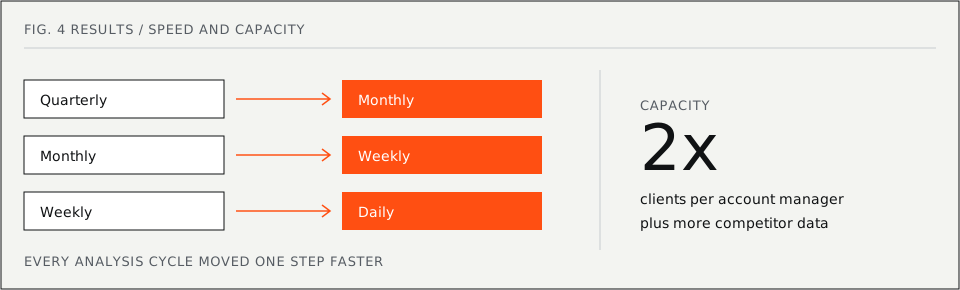
Account managers now handle double the clients. Every analysis cycle moved one step faster: quarterly work became monthly, monthly became weekly, and weekly became daily. The team also takes in more competitor data than before.
How long does an AI transformation take?
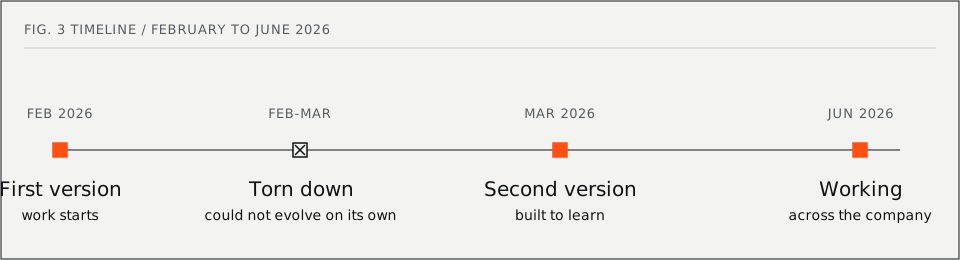
At Bidview, work started in February 2026. The first version had to be torn down because it could not evolve on its own. The second version started in March 2026 and was working by June 2026.
How did employees react to AI at Bidview?
Positively. The AI was built to assist the team without forcing a new way of working. Cameron changed the engine that pushes tasks and reviews data, and left the org chart alone.
What happens to staff roles in an agent-first company?
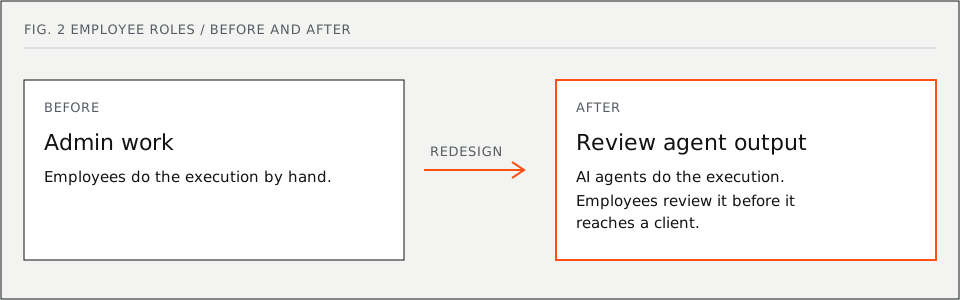
At Bidview, admin work moved into the AI engine and employees moved to reviewing agent output. Cameron updated the job descriptions to match, and an AI-enabled operating playbook trains account managers on the new workflows.
Do clients need to know how the AI works?
Clients care about outcomes. Cameron explains the system to clients who are curious, and most do not ask. The team talks about the system every week, and it is built to learn from their feedback.
How does Bidview keep AI work safe for clients?
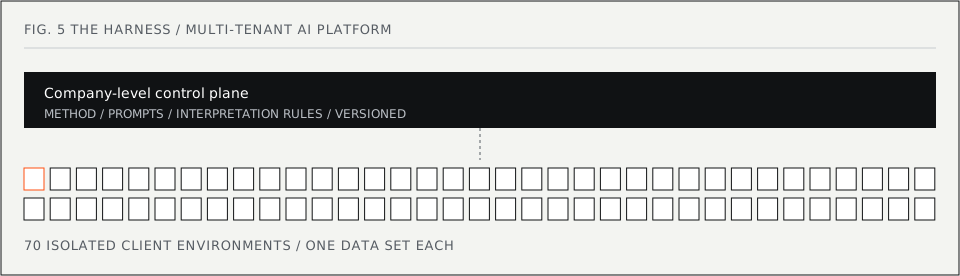
Every prompt and rule is under version control. Human review gates sit between agent output and the client. Each client's data stays in its own isolated environment.
Who leads AI change management?
At Bidview, the founder led it. Cameron LiButti made the architecture decisions and rewrote the job descriptions himself, so one person owned both the AI tools and the employee roles they changed.
Where do you start with AI change management?
Cameron starts with an audit: what is broken, what it costs, and which fix pays back first. At Bidview, the method then lives in one control plane, so AI agents and employees work from the same versioned rules.
How do you train employees for AI?
At Bidview, an AI-enabled operating playbook trains account managers. Employees learn to review agent output before it reaches a client, because review is their main job in the agent-first model.
Who should talk to Cameron about AI change management?
Owners and leadership teams who want to run their business agent-first. Contact Cameron by email at cameron@bidviewmarketing.com or through the contact page.